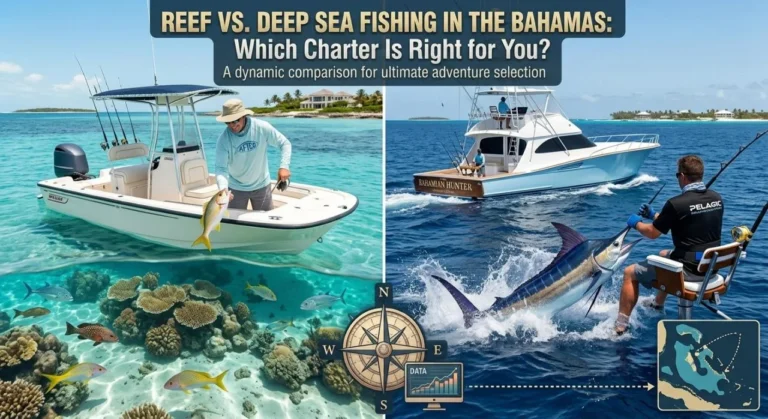
The waters surrounding the Bahamian archipelago are world-renowned for offering some of the most diverse marine environments on Earth. From shallow, sunlit coral banks to plunging abyssal trenches dropping thousands of feet, the region caters to every style of angler. However, first-time visitors planning a fishing excursion often face a fundamental choice: Should you book a reef fishing trip or venture out into deep water?
While both options promise action on the water, they differ significantly in boat dynamics, target species, tackle setups, and ideal weather conditions. Choosing between reef vs deep sea fishing depends entirely on your group’s budget, physical stamina, target catch goals, and overall comfort level on open ocean waters.
Strategic Comparison: Reef vs. Offshore Deep Sea Fishing
Understanding the operational differences between these two styles of angling helps set clear expectations before heading out from the marina dock.
|
Operational Feature |
Reef & Patch Reef Fishing |
Offshore Deep Sea Fishing |
|
Primary Depth Range |
10 to 60 feet |
200 to 6,000+ feet |
|
Average Distance from Shore |
1 to 5 miles (Inside sheltered banks) |
3 to 20+ miles (Beyond the drop-off) |
|
Typical Target Species |
Mutton Snapper, Grouper, Yellowtail, Barracuda |
Blue Marlin, Wahoo, Mahi-Mahi, Yellowfin Tuna |
|
Primary Fishing Technique |
Anchor & bottom fishing, chumming, light spinning |
Surface trolling, outrigger spreads, heavy conventional |
|
Water Conditions |
Calm, sheltered shallow bank waters |
Open-ocean swells & deep water current rips |
|
Ideal Charter Length |
Half-Day (3 to 4 Hours) |
Three-Quarter or Full-Day (6 to 8+ Hours) |
|
Group Suitability |
Families, beginners, guests prone to seasickness |
Experienced anglers, sportfishing enthusiasts, adults |
4 Key Operational Differences Every Angler Should Know
1. Water Topography and Distance to Fishing Grounds
Reef fishing takes place over shallow patch reefs and barrier coral heads, typically within 10 to 30 minutes of leaving the harbor. The water is crystal-clear turquoise, allowing anglers to often see bottom structures and fish swimming around the boat.
Conversely, deep sea fishing targets steep oceanic drop-offs, such as the famous Tongue of the Ocean or the Gulf Stream edge. Here, the ocean floor plummets dramatically into deep ink-blue water, requiring specialized navigation and open-water running.
2. Fishing Techniques and Tackle Requirements
Reef angling focuses primarily on bottom fishing and light-tackle spinning. The vessel typically sets anchor or drifts over structural relief points. Anglers drop weighted rigs baited with squid, cut fish, or live pilchards straight down to the sea floor, feeling for immediate taps and strikes.
Deep sea angling relies heavily on trolling spreads. The vessel remains in continuous forward motion at speeds between 6 and 14 knots. High-capacity conventional reels mounted on heavy-action rods deploy outriggers, weighted leads, skirted plastic lures, and rigged ballyhoo across the wake to attract fast-moving pelagic predators.
3. Physical Demands and Endurance Levels
Reef fishing requires minimal heavy lifting, making it accessible to virtually anyone. The light spinning rods used are easy to hold, and fish are brought up from shallow depths with steady, manageable reeling.
Deep sea sportfishing is physically demanding. Hooking a pelagic game fish like a 40-pound Wahoo or a 300-pound Blue Marlin requires intense core strength, endurance, and proper harness techniques. Fights can last anywhere from twenty minutes to over an hour, often testing an angler’s stamina.
4. Ocean Conditions and Comfort Levels
Shallow barrier reefs act as natural breakwaters, shielding boats from massive open-ocean waves. This creates calm, stable conditions ideal for keeping sea discomfort at bay.
Offshore deep sea fishing requires venturing past the protective barrier reef into untamed ocean waters. Swells, current rips, and wind-driven choppy seas are common, requiring participants to have solid sea legs or preventative motion sickness preparation.
Detailed Breakdown of Target Species
Reef Species Profiles
- Yellowtail Snapper: Highly active, schooling table fish found around outer reef drop-offs. They require light fluorocarbon leaders and steady chumming streams to bring them up into the upper water column.
- Mutton & Mangrove Snapper: Strong bottom dwellers that hide within coral crevices. Prized for their sweet white meat, they offer hard, sudden strikes near structural cover.
- Black & Nassau Grouper: Powerful ambush predators that strike bottom baits aggressively. Anglers must turn their heads immediately to prevent them from locking up inside coral caves.
- Great Barracuda: Apex predators of the shallow reefs. Famous for explosive surface strikes on tube lures, high-speed runs, and impressive aerial jumps.
Deep Sea Species Profiles
- Wahoo: High-speed pelagic game fish famous for initial runs exceeding 50 mph. They peak during winter months along deep drop-off walls.
- Mahi-Mahi (Dorado): Acrobatic, brightly colored surface runners that travel in schools around floating weed lines (Sargassum). They provide exceptional aerial fights and outstanding culinary quality.
- Yellowfin & Blackfin Tuna: Hard-fighting pelagic tuna that migrate through deep ocean channels. They test an angler’s upper body endurance with relentless deep-water vertical battles.
- Blue Marlin: The ultimate ocean trophy. Blue Marlin are famous for their bill-slapping strikes, immense physical power, and breathtaking leaping displays.
Comprehensive Target Species and Seasonal Matrix
|
Species |
Fishing Environment |
Average Depth |
Peak Season Months |
Culinary Value |
Recommended Tackle |
|
Yellowtail Snapper |
Shallow Coral Reefs |
15 – 45 ft |
Year-Round |
Excellent |
10 – 15 lb Spinning Gear |
|
Mutton Snapper |
Patch Reefs & Channels |
30 – 80 ft |
April to July |
Excellent |
20 – 30 lb Conventional Rigs |
|
Black Grouper |
Deep Coral Heads |
40 – 100 ft |
November to March |
Exceptional |
50 – 80 lb Heavy Bottom Gear |
|
Wahoo |
Ocean Drop-offs / Walls |
100 – 500 ft |
November to February |
Exceptional |
50 – 80 lb High-Speed Trolling |
|
Mahi-Mahi |
Open Ocean / Weed Lines |
Surface to 200 ft |
March to June |
Excellent |
30 – 50 lb Stand-up Trolling |
|
Yellowfin Tuna |
Deep Water Channels |
200 – 1,000+ ft |
April to July |
Exceptional |
50 – 80 lb Live-Bait / Trolling |
|
Blue Marlin |
Abyssal Trenches |
1,000 – 6,000+ ft |
May to August |
Catch-and-Release Only |
80 – 130 lb Heavy Sportfishing Gear |
Step-by-Step Selection Workflow for Your Group
Use this decision matrix to determine which charter style aligns best with your trip requirements.
Step 1: Assess Group Experience and Motion Sensitivity
If your group includes young children, multi-generational family members, or individuals prone to seasickness, reef fishing is the safer, more comfortable option. The shallow barrier reefs buffer open-ocean swells, providing calm conditions. Deep sea fishing involves navigating open ocean swells that can challenge inexperienced sea legs.
Step 2: Define Your Target Catch Goals
Determine whether your priority is keeping fresh fish for dinner or chasing a bucket-list trophy:
- Choose Reef Fishing if you want fast action, frequent bites, and high yield on delicious table fish like Yellowtail Snapper, Black Grouper, and Triggerfish.
- Choose Deep Sea Fishing if you are pursuing large game fish, structural aerial acrobatics, and high-speed battles with species like Blue Marlin, Wahoo, or Mahi-Mahi.
Step 3: Match Your Available Schedule and Budget
Half-day reef charters are economical and easily fit into tight cruise ship port calls or busy family vacation schedules. Deep sea charters require larger sportfishing vessels equipped with complex outriggers, diesel engines, and extensive fuel burn, making them a higher financial investment best experienced on 6 to 8-hour trips.
Pre-Charter Preparation Checklist
Follow this operational checklist to ensure a seamless trip out on the water.
Logistics and Booking
- [ ] Confirm charter type (Reef vs. Deep Sea) with all members of your group.
- [ ] Verify inclusion of captain, mate, tackle, bait, ice, and Bahamian fishing permits.
- [ ] Check weather forecasts and ocean swell warnings 24 hours prior to departure.
Personal Packing Requirements
- [ ] Non-marking, slip-resistant rubber-soled shoes.
- [ ] Polarized sunglasses for cutting water glare and spotting fish.
- [ ] Reef-safe lotion sunscreen (avoid aerosol spray sunscreens on fiberglass boat decks).
- [ ] Preventative motion sickness medication (taken the night before and morning of the trip).
- [ ] Cash for crew gratuities (15% to 20% standard) and dockside fish cleaning services.
Frequently Asked Questions
1. Can we keep and eat the fish we catch on reef vs. deep sea charters?
Yes, both styles yield excellent edible species. Reef trips produce high quantities of Snapper and Grouper, which local dockside restaurants will happily prepare for your dinner. Deep sea trips yield prized table fish like Mahi-Mahi, Wahoo, and Yellowfin Tuna. However, pelagic billfish (like Blue Marlin and Sailfish) are strictly catch-and-release.
2. Which type of fishing is best for young children?
Reef fishing is significantly better for children under 12. The action is fast and consistent, bottom drops provide instant gratification, and the calmer shallow waters prevent sea discomfort.
3. What is the best time of year for deep sea fishing in the Bahamas?
Deep sea target species rotate by season: Wahoo peak during winter months (November to February), Mahi-Mahi run strong in spring (March to May), and Blue Marlin peak during late spring and summer (May to July). Reef fishing offers consistent action year-round.
4. How far offshore do deep sea fishing charters travel in the Bahamas?
Because the underwater drop-offs (such as the Tongue of the Ocean) sit very close to islands like New Providence, deep sea charter boats often begin trolling within 1 to 3 miles of leaving the harbor.
5. Do I need prior fishing experience to book a deep sea charter?
No. Experienced captains and deckhands handle all technical rigging, baiting, and trolling setups. When a fish strikes, the mate will hand you the rod or secure you in the fighting chair, guiding you step-by-step through the process.
Conclusion
Neither reef fishing nor deep sea angling is inherently superior; they simply offer two entirely different ocean experiences. If you seek continuous action, calm waters, and fresh dinner fillets on a shorter schedule, a reef charter is an ideal choice. If you crave the adrenaline of heavy-tackle sportfishing and chasing pelagic ocean giants in deep water, booking an offshore deep sea excursion will deliver an unforgettable Bahamian adventure.